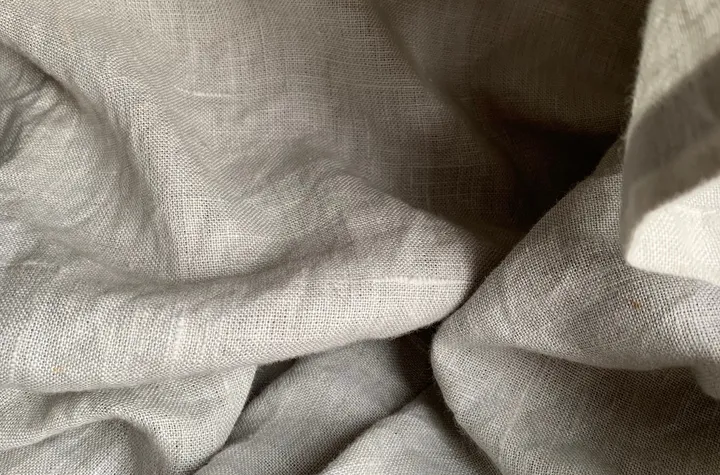
What is linen?
Linen textiles are made from flax, a plant bast fiber. [1]
- Classification
- Fiber · Natural
- Other names & related terms
- Flax linen; Flax
These are qualitative descriptions, not lab scores. Fiber, yarn, construction, finish and garment design can change performance. Always follow the finished article’s care label.
Composition
Flax cellulose; a linen blend also includes other fibers. [B][G]
Material origin
The fiber is extracted from the flax plant’s stem. [1]
Breathability & moisture
Absorbent; an open linen cloth and a dense one will not ventilate alike. [1][G][P]
Durability
Flax is strong; fabric construction remains important. [1]
Stretch characteristics
Low elasticity; do not assume a fitted linen garment will stretch. [G][K]
Care guidance
Wash or dry clean as labeled; pressing may be needed for a smooth finish. [1][C]
Typical applications
- Shirts
- Bedding
- Dresses
Examples, not suitability certifications. Sources: [1]
Advantages & limitations
What it offers
Strength and a characteristic textured appearance. [1]
What to consider
Practical editorial guidance
Before you choose
Choose a sample based on the silhouette you want. For a relaxed shirt, decide whether you enjoy visible creasing. For lined clothing, assess the lining as well as the outer fabric. A linen-looking texture alone does not establish flax content.
Sources & review notes
References support the statements marked above. Industry sources may promote their own materials; this guide makes no universal comfort or sustainability ranking.
- [1] CFDA — Flax (linen) ↗
Fiber properties, applications and care.
- [G] University of Georgia Extension — Fiber types ↗
Fiber families, blends, moisture absorption and elasticity.
- [C] FabricLink — General fabric care ↗
Care depends on the finished article and its label.
- [K] CottonWorks — Knit basics ↗
Loop construction, stretch and uses.
- [P] CottonWorks — Air permeability ↗
Airflow is measured on a fabric sample under specified test conditions; it is distinct from fiber absorbency.
- [B] Cotton Incorporated — Textile fibers ↗
Fiber chemistry and classification; natural cellulosic and protein fibers, and synthetic polymers.
Last reviewed: . Suggest a correction.