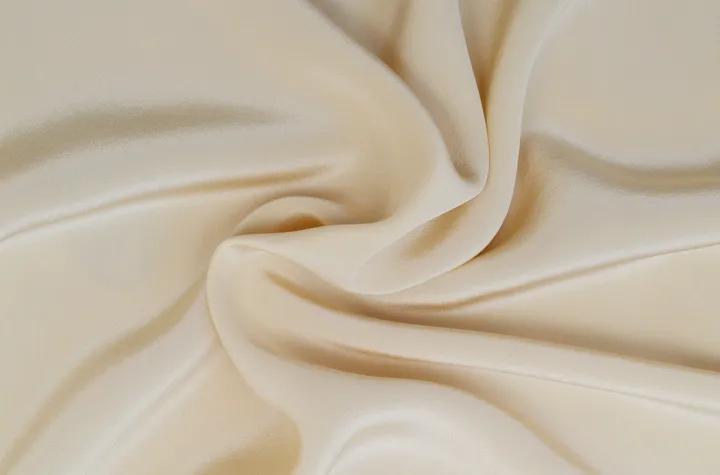
What is silk?
Silk is a fiber, not a synonym for a shiny fabric. [2]
- Classification
- Fiber · Natural
- Other names & related terms
- Silk fiber
These are qualitative descriptions, not lab scores. Fiber, yarn, construction, finish and garment design can change performance. Always follow the finished article’s care label.
Composition
Protein filaments; silk textiles may be pure or blended. [2][G]
Material origin
Produced by silkworms for their cocoons. [2]
Breathability & moisture
Absorbent; weave, weight and lining influence comfort. [1][G][P]
Durability
Abrasion resistance is limited; prolonged sunlight can damage it. [1]
Stretch characteristics
Fiber elasticity does not make every silk woven a stretch fabric. [G][K]
Care guidance
Hand wash only if labeled washable; otherwise follow professional-care instructions. [1][C]
Typical applications
- Dresses
- Scarves
- Blouses
Examples, not suitability certifications. Sources: [1]
Advantages & limitations
What it offers
Takes color well; can be tailored into different fabric handles. [1]
What to consider
Practical editorial guidance
Before you choose
To buy silk, read the fiber label first. Then decide on the construction: silk chiffon, silk satin and silk organza behave differently. For an everyday item, factor the care requirement into your choice before selecting a color or finish.
Sources & review notes
References support the statements marked above. Industry sources may promote their own materials; this guide makes no universal comfort or sustainability ranking.
- [1] FabricLink — Silk ↗
Fiber properties, applications and care.
- [G] University of Georgia Extension — Fiber types ↗
Fiber families, blends, moisture absorption and elasticity.
- [C] FabricLink — General fabric care ↗
Care depends on the finished article and its label.
- [K] CottonWorks — Knit basics ↗
Loop construction, stretch and uses.
- [2] Cotton Incorporated — Textile fibers ↗
Fiber origins and production processes.
- [P] CottonWorks — Air permeability ↗
Airflow is measured on a fabric sample under specified test conditions; it is distinct from fiber absorbency.
Last reviewed: . Suggest a correction.