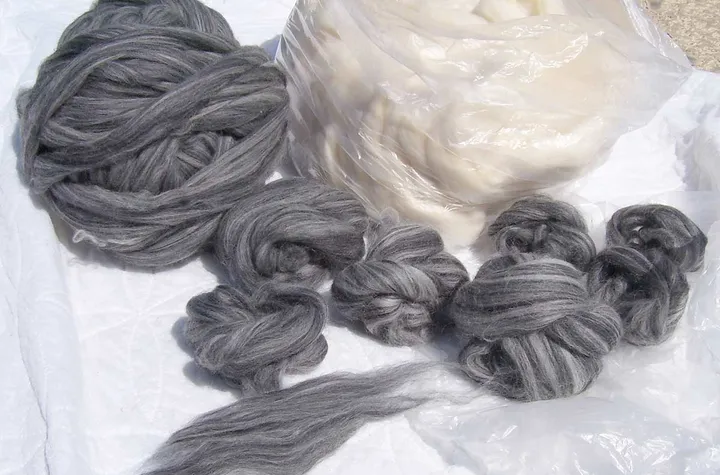
What is wool?
Wool is an animal protein fiber; Merino is one type of sheep’s wool. [2][1]
- Classification
- Fiber · Natural
- Other names & related terms
- Sheep’s wool; Merino wool (a type)
These are qualitative descriptions, not lab scores. Fiber, yarn, construction, finish and garment design can change performance. Always follow the finished article’s care label.
Composition
Protein fiber; wool blends contain additional fibers. [2]
Material origin
Obtained from sheep fleece, then processed into textile fiber. [2]
Breathability & moisture
Can absorb moisture vapor; airflow varies with the fabric. [2][P]
Durability
Natural resilience supports wear; assess the finished construction. [2]
Stretch characteristics
Natural stretch and recovery, with additional give in knitted structures. [G][K]
Care guidance
Follow the wool care label; machine wash or tumble dry only when permitted. [1][C]
Typical applications
- Knitwear
- Outerwear
- Tailoring
Examples, not suitability certifications. Sources: [2]
Advantages & limitations
What it offers
Resilience and moisture management. [2]
What to consider
Some articles need careful washing to prevent felting or distortion. [1][G]
Practical editorial guidance
Before you choose
A fine knitted base layer and a heavy coat can both be wool. Choose the finished fabric for the climate and intended layering. If easy laundering matters, look for an explicit machine-wash care claim rather than assuming all wool needs the same care.
Sources & review notes
References support the statements marked above. Industry sources may promote their own materials; this guide makes no universal comfort or sustainability ranking.
- [1] Woolmark — Caring for wool ↗
Care-label guidance and washing wool articles.
- [G] University of Georgia Extension — Fiber types ↗
Fiber families, blends, moisture absorption and elasticity.
- [C] FabricLink — General fabric care ↗
Care depends on the finished article and its label.
- [K] CottonWorks — Knit basics ↗
Loop construction, stretch and uses.
- [P] CottonWorks — Air permeability ↗
Airflow is measured on a fabric sample under specified test conditions; it is distinct from fiber absorbency.
- [2] Woolmark — What is the wool fibre? ↗
Sheep-fiber origin, protein composition, elasticity, moisture absorption and applications.
Last reviewed: . Suggest a correction.